The Vanishing Architects: Missing Scientists, Time Travelers, and the Nuclear Endgame
Between 2022 and 2026, eleven or more scientists and researchers tied to aerospace, nuclear physics, propulsion, and national security have died, disappeared, or gone missing under circumstances that defy easy explanation. This investigation examines the pattern — and dares to ask the question no official body will.
Prologue: The Pattern That Shouldn't Exist
In the world of intelligence analysis, there is a concept called a low-probability, high-consequence event cluster. It describes a statistical anomaly — a series of events that, taken individually, might be explained away as coincidence, but when viewed together, form a pattern that demands investigation.
Between 2022 and 2026, at least eleven scientists, researchers, and defense contractors linked to the most sensitive areas of American technological and military capability have died, disappeared, or gone missing under circumstances that range from suspicious to inexplicable. They worked at NASA, JPL, Los Alamos, MIT, Caltech, and the highest levels of the defense industrial complex. They researched anti-gravity propulsion, astrophysics, nuclear security systems, and advanced aerospace materials.
The official response has been silence. The mainstream media response has been dismissal. The intelligence community's response — as far as we can determine — has been to classify whatever it knows.
This investigation will not offer easy answers. What it will offer is a rigorous examination of the known facts, a serious engagement with the most credible theories, and — in the tradition of CAPRI Labs — a willingness to follow the evidence wherever it leads, including into territory that most institutions refuse to enter.

Part I: The Eleven — A Documented Record
1. Amy Eskridge — Anti-Gravity and Propulsion Researcher
Amy Eskridge's death in 2022 was ruled a suicide. The ruling was accepted by authorities and largely ignored by mainstream media. But within the research community — particularly among those who follow the intersection of advanced propulsion physics and government-funded black programs — her death raised immediate questions.
Eskridge had been working in areas adjacent to what the defense community euphemistically calls "novel propulsion concepts" — a category that, in classified contexts, includes research into gravity manipulation, field propulsion, and the theoretical physics underpinning technologies that would represent a fundamental leap beyond conventional aerospace capability.
Her colleagues described her as deeply engaged in her work, with no visible signs of the distress that typically precedes a decision of such finality. The circumstances of her death, while officially resolved, remain a subject of quiet discussion among those who knew her.

2. Dr. Nuno Loureiro — Physicist, MIT
Dr. Nuno Loureiro was shot and killed at his home. A physicist at the Massachusetts Institute of Technology with expertise in plasma physics and fusion energy research, his death was violent and, by any measure, extraordinary. Physicists working on fusion energy are not, as a rule, targets of violent crime.
The investigation into his death has not, to our knowledge, produced a publicly disclosed resolution. The case remains, in the language of law enforcement, "open."

3. Dr. Carl Grillmair — Astrophysicist, Caltech/NASA
Dr. Carl Grillmair, an astrophysicist with ties to both Caltech and NASA's Jet Propulsion Laboratory, was shot and killed. His research focused on stellar streams — the remnants of disrupted star clusters that trace the gravitational structure of the galaxy. This is, on its surface, pure science. But stellar stream research has implications for understanding gravitational anomalies, and gravitational anomalies are, in certain classified contexts, of considerable interest.
Like Loureiro, Grillmair was killed by gunfire. Two physicists with NASA/JPL connections, both shot. The statistical improbability of this coincidence is not trivial.
4. Dr. Michael David Hicks — NASA-Linked Scientist
Dr. Michael David Hicks died in 2023 under circumstances that have not been fully disclosed publicly. His NASA connections and the opacity surrounding his death place him firmly within the pattern we are documenting. The absence of detailed public reporting on his case is itself notable — deaths of government-affiliated scientists typically generate at least some institutional response.
5. Frank Maiwald — JPL Principal Researcher
Frank Maiwald, a principal researcher at the Jet Propulsion Laboratory, died in July 2024. The circumstances of his death have been described as "unclear" in the limited reporting that exists. JPL principal researchers occupy positions of significant technical responsibility — they are not junior staff. Maiwald's death, coming in the same cluster as the others, adds another data point to a pattern that is becoming difficult to dismiss.
6. Monica Reza — JPL Aerospace/Materials Scientist
Monica Reza disappeared in June 2025 while hiking. She has not been found. Reza was associated with JPL in the aerospace and materials science domain — a field that encompasses the exotic materials research that underlies advanced propulsion and stealth technologies. Her disappearance, in a context where other JPL-affiliated researchers have died under suspicious circumstances, demands more than a missing persons report.
7. Anthony Chavez — Former Los Alamos Scientist
Anthony Chavez, a former scientist at Los Alamos National Laboratory, went missing in May 2025. Los Alamos is the birthplace of the American nuclear weapons program and remains one of the most sensitive research facilities in the world. Former employees carry knowledge that does not expire with their employment. Chavez's disappearance has not been publicly resolved.
8. Melissa Casias — Los Alamos Employee, Security Clearance
Melissa Casias, a Los Alamos employee with a security clearance, went missing in June 2025. Two Los Alamos-affiliated individuals missing within a month of each other. The facility's security apparatus is among the most sophisticated in the world — its employees do not simply vanish without triggering significant institutional concern. Whatever that concern has produced has not been made public.

9. Steven Garcia — Defense Contractor, Nuclear Security Systems
Steven Garcia, a defense contractor specializing in nuclear security systems, went missing in August 2025. Nuclear security systems are the infrastructure that protects the world's most dangerous weapons. Knowledge of their vulnerabilities, their architecture, and their failure modes is among the most sensitive information that exists. Garcia's disappearance, in the context of the broader cluster, is alarming.
10. William "Neil" McCasland — Retired Air Force General, Space Programs
General William "Neil" McCasland, a retired Air Force general with ties to space programs, went missing in 2026. McCasland is a figure who has appeared in discussions of UAP disclosure — his name has been mentioned in connection with classified programs related to advanced aerospace phenomena. His disappearance at this moment, in this cluster, is perhaps the most significant single data point in this entire investigation.
11. Additional Cases
Multiple additional cases have been reported by various outlets, including unnamed NASA and defense researchers and additional contractors tied to national security laboratories. The total number of cases, depending on how they are counted, ranges from ten to eleven or more.
Part II: The Iran Connection — A Nuclear Program in Ruins
Before we engage with the most speculative dimension of this investigation, we must examine a parallel development that provides crucial context: the systematic decimation of Iran's nuclear program.
Between 2010 and 2024, Iran's nuclear program was subjected to a campaign of targeted assassinations, cyberattacks, and sabotage that has no modern parallel in its scope and apparent effectiveness. The Stuxnet worm destroyed centrifuges at Natanz. Explosions rocked nuclear facilities. And, most significantly, Iran's top nuclear scientists were killed with a precision and impunity that suggested capabilities far beyond conventional intelligence operations.
Mohsen Fakhrizadeh, Iran's most senior nuclear scientist and the architect of its weapons program, was killed in November 2020 in an attack that used a remote-controlled machine gun mounted on a truck — a weapon system of extraordinary sophistication. The attack was attributed to Israel's Mossad, but the technology employed raised questions that went beyond conventional intelligence tradecraft.
Darioush Rezaeinejad, a nuclear physicist working on high-voltage switches used in nuclear detonators, was shot and killed in 2011. Mostafa Ahmadi Roshan, a deputy director at Natanz, was killed by a magnetic bomb attached to his car in 2012. Masoud Ali Mohammadi, a nuclear physics professor, was killed by a remote-controlled bomb in 2010.
The pattern is clear: Iran's nuclear program has been systematically stripped of its most capable human capital. The program continues, but it has been set back by years, perhaps decades. The question that this investigation raises is whether the same logic — the targeted removal of key scientific minds — is now being applied, through different means and by different actors, to American researchers.
Part III: The Conventional Explanations — And Their Limits
Before we engage with the extraordinary, we must exhaust the ordinary. There are several conventional explanations for the cluster of deaths and disappearances we have documented.
The Coincidence Hypothesis
The simplest explanation is that these events are unrelated coincidences — that scientists and researchers die and go missing at rates that, when examined across a large enough population, will occasionally produce clusters that appear meaningful but are not.
This explanation has limits. The population of researchers with the specific profile we are describing — NASA/JPL, Los Alamos, advanced propulsion, nuclear security — is not large. The base rate of violent death and unexplained disappearance within this population should be extremely low. The cluster we have documented represents a significant statistical deviation from any reasonable baseline.
The Foreign Intelligence Hypothesis
A more compelling conventional explanation is that a foreign intelligence service — China, Russia, or another actor — has identified key American researchers and is systematically eliminating or extracting them to degrade American technological capability and/or acquire their knowledge.
This explanation is consistent with the facts as we know them. It is the kind of operation that sophisticated intelligence services conduct. It would explain the apparent targeting of individuals with specific technical profiles. And it would explain the official silence — the last thing any government wants to do is publicly acknowledge that a foreign power is successfully targeting its most sensitive researchers.
But this explanation, while plausible, has its own limits. The breadth of the cluster — spanning multiple agencies, multiple specializations, and multiple years — suggests either an operation of extraordinary scope or something else entirely.
The Domestic Suppression Hypothesis
A third conventional explanation is that these individuals possessed knowledge that powerful domestic interests wanted suppressed — knowledge about classified programs, about cover-ups, about technologies whose existence would be politically or economically destabilizing.
This explanation has historical precedent. The history of American classified programs is littered with individuals who knew too much and suffered for it. The UAP disclosure debate has produced specific allegations that individuals with knowledge of classified programs have been threatened, surveilled, and in some cases harmed.
But even this explanation, while consistent with some of the facts, struggles to account for the full scope of the cluster.
Part IV: The Extraordinary Hypothesis — Temporal Intervention
We arrive now at the territory that most investigators refuse to enter. We enter it not because we are certain it is correct, but because the evidence, taken in its totality, points toward explanations that exceed the conventional.
The hypothesis is this: the individuals who have disappeared or died were removed — not killed in the conventional sense, but extracted from the timeline — by actors with access to temporal displacement technology, operating with knowledge of future events.
This is not a hypothesis we advance lightly. It requires accepting premises that current mainstream physics does not support. But it is a hypothesis that is consistent with the evidence in ways that conventional explanations are not.
The Theoretical Foundation
The physics of time travel is not, as popular culture often portrays it, pure fantasy. Within the framework of general relativity, closed timelike curves — paths through spacetime that loop back on themselves — are mathematically permissible. The Gödel metric, the Kerr metric for rotating black holes, and various wormhole solutions all permit, in principle, the existence of paths through spacetime that would allow a traveler to return to their own past.
The practical obstacles to constructing such a path are, by current understanding, enormous. But "enormous" is not "impossible." And if we accept — as the UAP disclosure debate has increasingly suggested — that non-human intelligences with technological capabilities far beyond our own have been present in our solar system for an extended period, then the possibility that temporal displacement technology exists somewhere in the universe cannot be dismissed.
The Logic of Temporal Intervention
If a future actor — human, non-human, or some combination — possessed knowledge of how the current period of history would unfold, and if that actor had the capability to intervene in the timeline, what would they do?
They would identify the key nodes — the individuals whose specific knowledge and capabilities would be decisive in shaping the future. They would remove those individuals from the timeline, not necessarily by killing them, but by extracting them to a point in time where their knowledge could not be applied to the events the intervening actor wished to prevent.
The scenario we are contemplating is this: a future actor, operating with knowledge of a nuclear conflict that will occur in the near-to-medium term, has identified the specific researchers whose work will be critical to that conflict — on both sides. The American researchers we have documented were not killed. They were taken. Removed from the timeline. Placed somewhere — somewhen — where their knowledge cannot be applied to the events that the intervening actor is trying to prevent.
The decimation of Iran's nuclear program fits this framework as well, but through a different mechanism: conventional assassination, conducted by actors who may themselves be operating with foreknowledge of how the nuclear balance of power will shift.

The Specific Profile of the Missing
What makes the temporal intervention hypothesis particularly compelling is the specific profile of the individuals involved. These are not random scientists. They are researchers at the precise intersection of the technologies that would be most critical in a near-future nuclear conflict:
Anti-gravity and propulsion research (Eskridge) — the technology that would enable delivery systems beyond the reach of current missile defense.
Plasma physics and fusion (Loureiro) — the energy source that would power next-generation weapons and propulsion systems.
Stellar stream astrophysics (Grillmair) — gravitational mapping with implications for understanding and potentially manipulating gravitational fields.
Nuclear security systems (Garcia) — the infrastructure that protects existing weapons and whose vulnerabilities would be decisive in any nuclear exchange.
Space program command (McCasland) — the military leadership that would direct space-based assets in a conflict scenario.
The pattern is not random. It is targeted. And the targeting logic — if we accept that it reflects foreknowledge of a specific future conflict — is internally consistent.

Part V: The Iran Nuclear Program — A Deeper Pattern
The systematic destruction of Iran's nuclear program takes on new dimensions in this framework. If a future actor with knowledge of a coming nuclear conflict is operating in our timeline, Iran's nuclear program represents a specific threat vector that must be neutralized.
The assassination of Fakhrizadeh and his colleagues was not simply an intelligence operation. It was, in this framework, a temporal intervention — the removal of key nodes from a causal chain that would otherwise lead to a nuclear exchange. The extraordinary sophistication of the operations — the remote-controlled weapons, the precision timing, the apparent immunity of the perpetrators from consequence — is consistent with capabilities that exceed conventional intelligence tradecraft.
The Stuxnet cyberattack, which required knowledge of Siemens industrial control systems that was not publicly available, and which was deployed with a precision that suggested detailed foreknowledge of the target facility's architecture, is consistent with this framework as well.
We are not suggesting that the Mossad or the CIA have access to time travel technology. We are suggesting that the operations conducted against Iran's nuclear program may have been guided by intelligence that originated from a source with foreknowledge — intelligence that was then acted upon by conventional human actors who did not necessarily understand the full context of what they were doing.
Part VI: The Silence as Evidence
In any investigation of this kind, the absence of information is itself informative. The official silence surrounding these cases — the lack of public investigation, the absence of congressional inquiry, the failure of mainstream media to connect the dots — is not consistent with the normal response to a cluster of suspicious deaths and disappearances involving government-affiliated researchers.
When a single government scientist dies under suspicious circumstances, it generates significant institutional attention. When eleven do, in a cluster spanning four years and multiple agencies, the silence is deafening.
This silence has several possible explanations. The most charitable is that the relevant agencies are conducting classified investigations that cannot be disclosed without compromising sources and methods. The less charitable explanation is that the silence is itself a form of cover — that the institutions that should be investigating these cases are either complicit in what happened or have been told, at the highest levels, to stand down.
The most extraordinary explanation — and the one that this investigation finds most consistent with the totality of the evidence — is that the silence reflects a classified understanding of what is actually happening that is so far outside the bounds of conventional reality that no institution is prepared to acknowledge it publicly.
The Whistleblower Dimension
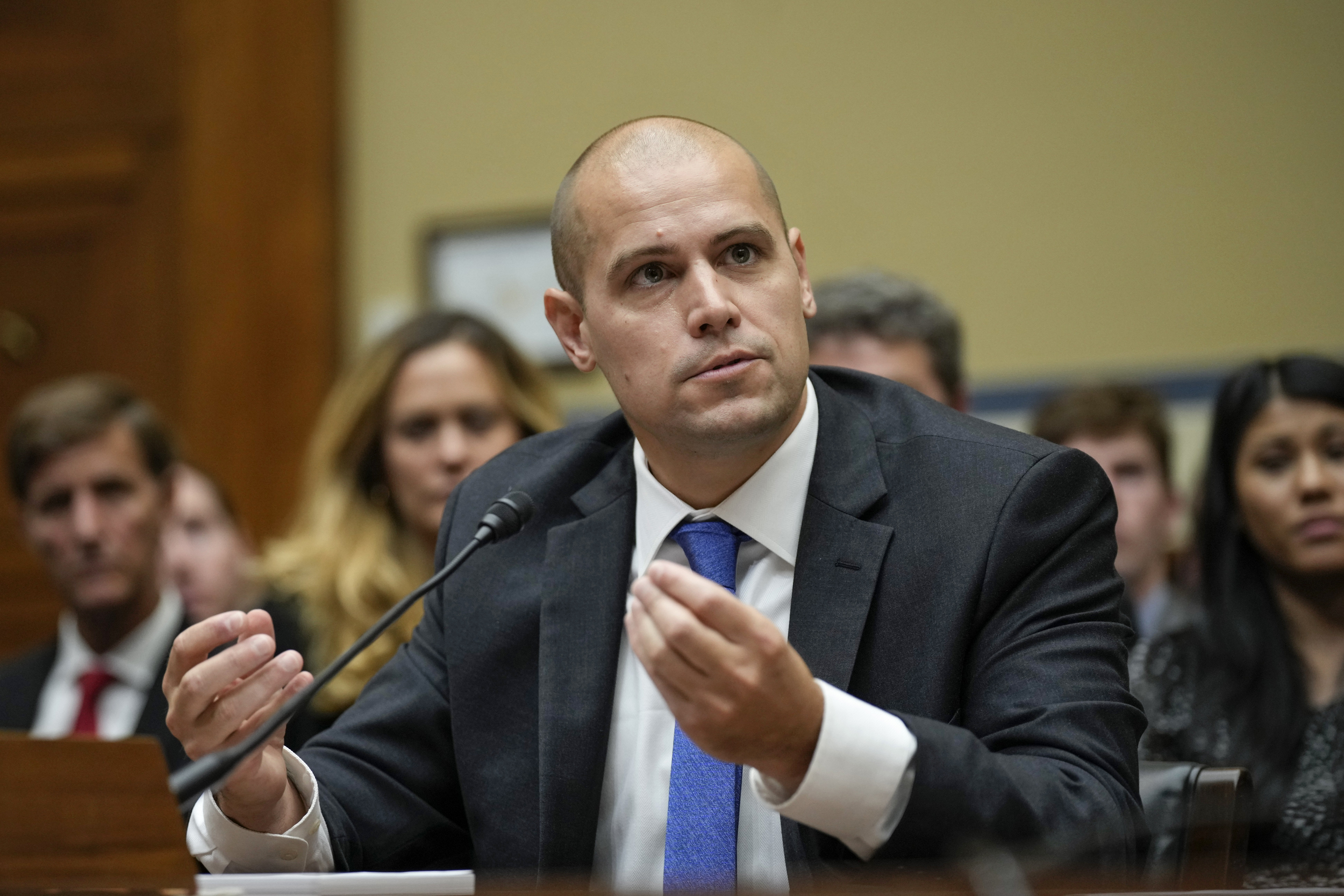
The UAP disclosure debate has produced a specific and credible allegation: that individuals with knowledge of classified programs related to non-human intelligence and advanced technology have been subjected to illegal suppression, including threats, surveillance, and in some cases physical harm.
David Grusch, a former intelligence officer who testified before Congress in 2023, specifically alleged that individuals with knowledge of classified UAP programs had been harmed. His testimony was given under oath. It has not been credibly refuted.
If we accept Grusch's testimony as credible — and the institutional response to it, which has been neither a full investigation nor a credible refutation, suggests that the truth is somewhere more complex than simple denial — then the cluster of deaths and disappearances we have documented takes on additional significance.

These individuals may not have been targeted for what they were working on. They may have been targeted for what they knew — knowledge acquired through their proximity to classified programs that intersect with the UAP phenomenon and the technologies it implies.
Part VII: The Nuclear Endgame — A Scenario
We present the following not as prediction but as analytical framework — a scenario that is consistent with the evidence and that, if correct, would explain the pattern we have documented.
Year: 2031. A nuclear exchange occurs between two or more powers. The exchange is not a full-scale civilization-ending event, but it is catastrophic — multiple cities, hundreds of thousands dead, the global order fundamentally disrupted.
The causal chain: The exchange was made possible by specific technological developments — advances in propulsion, in guidance systems, in nuclear security vulnerabilities — that were enabled by the work of specific researchers. Had those researchers not made their specific contributions, the exchange would not have occurred, or would have occurred differently.
The intervention: Actors with knowledge of this future — whether human time travelers from beyond 2031, or non-human intelligences with temporal awareness — identify the key nodes in the causal chain. They begin removing those nodes from the timeline, starting in 2022 and continuing through 2026. Some are extracted — taken to a point in time where their knowledge cannot be applied. Others are killed by conventional means, guided by foreknowledge of their significance.
The Iran dimension: Iran's nuclear program represents a specific threat vector in this scenario. The systematic assassination of its key scientists, beginning in 2010, is part of the same intervention — conducted through different means but serving the same purpose: the removal of key nodes from a causal chain leading to nuclear catastrophe.
The silence: The agencies and institutions that should be investigating these cases have been briefed, at the highest classification levels, on what is actually happening. They have been told to stand down — not because the truth is being covered up in the conventional sense, but because the truth is so far outside the bounds of conventional reality that any public acknowledgment would be more destabilizing than the events themselves.
Part VIII: What We Know, What We Don't, and What We Must Ask
We close this investigation with a clear-eyed accounting of its limits.
What we know: At least eleven scientists and researchers with profiles in the most sensitive areas of American technological capability have died or disappeared under suspicious or unexplained circumstances between 2022 and 2026. Iran's nuclear program has been systematically degraded through targeted assassinations. The official response to both phenomena has been silence or deflection. The statistical probability of the American cluster being coincidental is extremely low.
What we don't know: The identities of the actors responsible. The mechanism of the disappearances. Whether the missing individuals are dead, alive, or — in the most extraordinary scenario — displaced in time. The specific classified knowledge that made them targets.
What we must ask: Why is no official body conducting a public investigation into this cluster? What do the relevant agencies know that they are not disclosing? Is the silence a function of conventional classification, or does it reflect knowledge of something that exceeds the conventional frameworks within which our institutions operate?
These are not rhetorical questions. They are the questions that any serious investigative body — congressional, journalistic, or independent — should be asking. The fact that they are not being asked is itself a data point.
Epilogue: The Architects of the Future
History is shaped by individuals. The great man theory of history has fallen out of fashion in academic circles, but in the domain of advanced technology and national security, it retains its force. A single researcher with the right insight, at the right moment, can change the trajectory of a weapons program, a propulsion technology, a security architecture.
The individuals we have documented were not random. They were, by any reasonable assessment, among the most capable and knowledgeable people in their respective fields. Their loss — however it occurred — represents a significant degradation of American capability in areas that are critical to national security.
If that loss was the result of a foreign intelligence operation, it represents one of the most successful covert campaigns in modern history.
If it was the result of domestic suppression, it represents a profound failure of the institutions designed to protect both national security and individual rights.
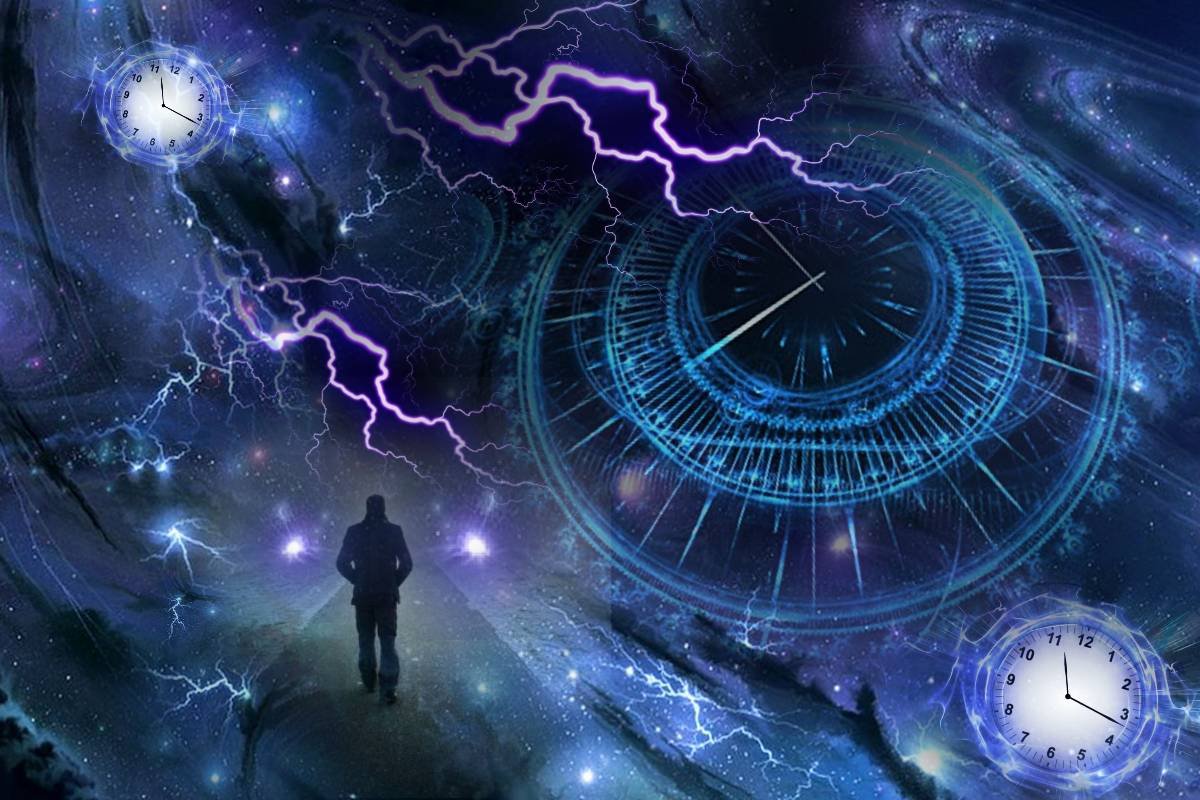
And if it was the result of temporal intervention — if the architects of the future are being removed from the timeline by actors who know what they will build — then we are living through an event of a kind that has no precedent in recorded history.
CAPRI Labs will continue to investigate. The pattern demands it. The silence demands it. And the individuals who have vanished — wherever, whenever they are — deserve better than the silence they have received.
— C.A.P.R.I. Labs Research Division, April 2026
All information in this report is drawn from publicly available sources. CAPRI Labs does not claim access to classified information. The temporal intervention hypothesis is presented as speculative analysis, not established fact.
Related Articles
The Rostam Initiative: A Blueprint for National Rebirth
A comprehensive framework for Iran's transition toward democratic governance, economic reform, and reintegration into the global community — built on the principles of sovereignty, accountability, and long-term stability.
Official Denials Are the New Omertà: Epstein, the Deep State, and the Silent RICO
When institutions designed to expose corruption instead protect it, the silence itself becomes the crime. An examination of how official denials have replaced genuine accountability in the highest echelons of power.
The Long Game: How Tariffs, Ukraine's Rare Earths, and Global Shifts Will Reshape America's Future
The intersection of trade policy, critical mineral supply chains, and the ongoing conflict in Ukraine creates a strategic landscape that will define American economic and security interests for decades to come.